

Showing posts with label copts. Show all posts
Showing posts with label copts. Show all posts
Friday, February 20, 2015


Thursday, December 4, 2014
Monday, June 9, 2014
Sunday, January 12, 2014
Coptic TV Live Stream - Watch Coptic Orthodox TV Channel Live Stream
 Coptic TV (CTV) is the official Coptic Orthodox TV station broadcasting in Arabic via satellite to Coptic Christians in Egypt and in North America.
 Saturday, December 21, 2013
The Dire Warning From British Royalty: Christianity Is Starting ‘to Disappear’ from the Middle East

Prince Charles visiting a Syrian Orthodox Church in west London
Tuesday, November 26, 2013
Egypt 'worst for women' out of 22 countries in Arab world

Egypt is now the worst country for women's rights in the Arab world, according to a poll of gender experts.
The study found
sexual harassment, high rates of female genital mutilation and a growth
in conservative Islamist groups contributed to the low ranking.Wednesday, November 13, 2013
Egyptian Christians to be allowed to build Churches without permit of president
Copts will be able to build their churches in Egypt freely and will not have to wait a long time for the president's permit. The rule was passed last week in Cairo by the Committee of 50, the assembly which edits alterations of the constitution adopted by Islamists in 2012.
Wednesday, October 30, 2013
Egyptian Christian Arrested for the Crime of Forming a Facebook Group
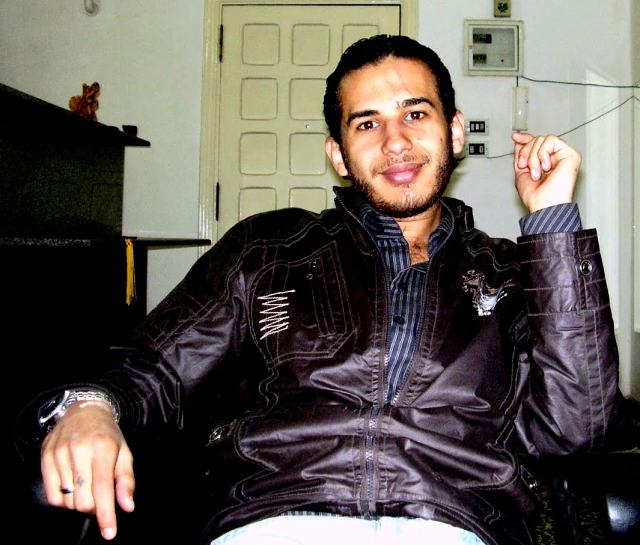
Alber Saber, photo from his blog.
Egyptian blogger and computer science student, Alber Saber, has been arrested and charged with insulting Islam. He is being held in while the investigation continues.
Sunday, October 27, 2013
Amid new attacks, Egypt's Copts preserve Christian heritage

photo shows a fresco in the Anba Bishay Church the at the Red Monastery
located in the desert on the edge of the Nile River valley, some 500
kilometers (310 miles) south of Cairo. Little known and rarely visited,
the Anba Bishay Church offers a striking example of how Egyptís Orthodox
Coptic Church is jealously guarding its heritage against formidable
odds _ whether decades of neglect, discrimination by the Muslim majority
or the threat of violence by Islamic militants, who have gained
significant power since the 2011 ouster of longtime autocrat Hosni
Mubarak. The protection of its heritage took on greater urgency when 40
churches were wrecked, burned or looted in a pogrom-like wave of attacks
in August, blamed on Islamic militants. Coptic leaders call it the
worst such attacks in centuries.(AP Photo/Manu Brabo)
Tuesday, June 4, 2013
EGYPT: Coptic Christians hold protest after coming under attack at monastery in southern Egypt
Full Story >>>
Thursday, April 11, 2013
EGYPT: Egypt's Christian pope blasts Islamist president

CAIRO (AP) — The leader of Egypt's Coptic Orthodox Church on Tuesday blasted the country's Islamist president over his handling of recent deadly sectarian violence, including an attack on the main cathedral in Cairo.
The remarks by Pope Tawadros II underscore rising Muslim-Christian tensions in Egypt. They were his first direct criticism of President Mohammed Morsi since he was enthroned in November as the spiritual leader of Egypt's Orthodox Christians. They are also likely to fuel political turmoil that has been roiling the country since the ouster of autocrat Hosni Mubarak two years ago.
Egypt is already divided between two camps, with Morsi and Islamist allies in one and moderate Muslims, Christians and liberals in the other. The political schism is essentially over Egypt's political future after decades of dictatorship, a divide that has been compounded by a worsening economy and tenuous security.
An open conflict between Morsi's government and the church could add a new and potentially explosive layer, pushing Egypt to the brink of civil strife.
Wednesday, April 10, 2013
EGYPT: 9-Apr-13 - Egypt's Christians Call For Peace After Attack On Orthodox Cathedral
 CAIRO, EGYPT, (CNA) .- Christian leaders in Egypt appealed for calm after a mob attacked St. Mark's Coptic Orthodox Cathedral in Cairo on Sunday during the funeral of four Coptic Christians killed in sectarian clashes....
Friday, March 15, 2013
EGYPT: Shape-Shifting Jesus Described in Ancient Egyptian Text
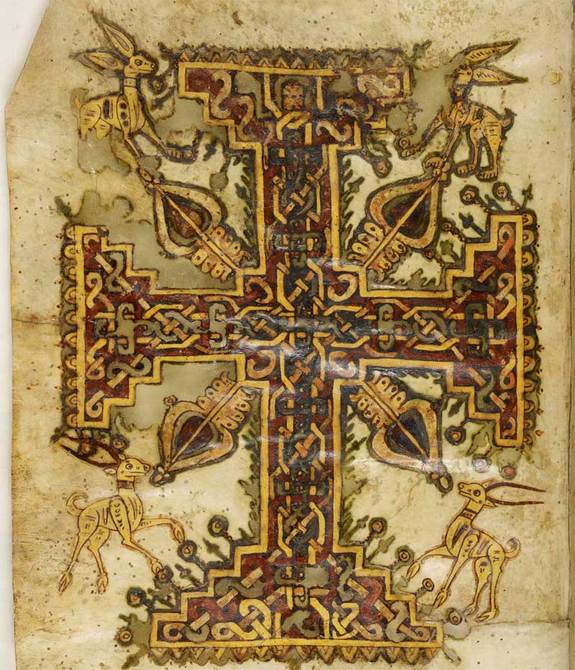
A newly deciphered Egyptian text, dating back almost 1,200 years, tells part of the crucifixion story of Jesus with apocryphal plot twists, some of which have never been seen before.
Written in the Coptic language, the ancient text tells of Pontius Pilate,
the judge who authorized Jesus' crucifixion, having dinner with Jesus
before his crucifixion and offering to sacrifice his own son in the
place of Jesus. It also explains why Judas used a kiss, specifically, to
betray Jesus — because Jesus had the ability to change shape, according
to the text — and it puts the day of the arrest of Jesus on Tuesday evening rather than Thursday evening, something that contravenes the Easter timeline.
The discovery of the text doesn't mean these events happened, but
rather that some people living at the time appear to have believed in
them, said Roelof van den Broek,
of Utrecht University in the Netherlands, who published the translation
in the book "Pseudo-Cyril of Jerusalem on the Life and the Passion of Christ"(Brill, 2013).
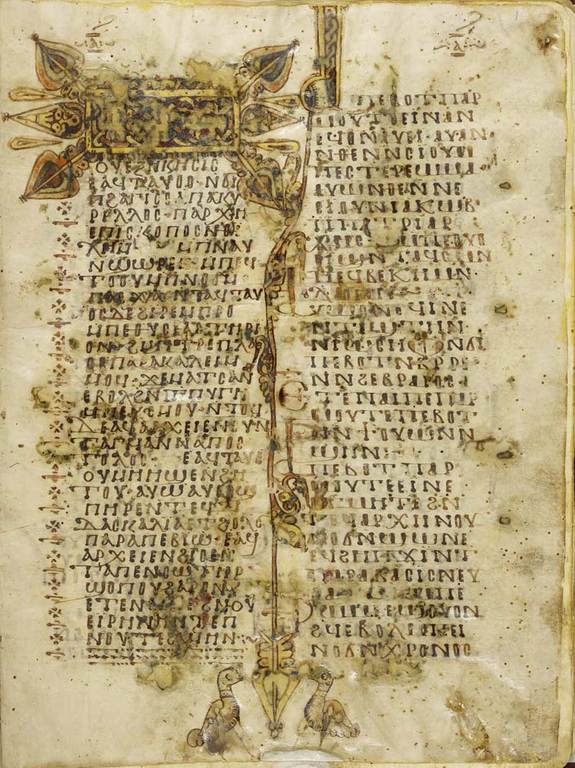
Copies of the text are found in two manuscripts, one in the Morgan
Library and Museum in New York City and the other at the Museum of the
University of Pennsylvania. Most of the translation comes from the New
York text, because the relevant text in the Pennsylvania manuscript is
mostly illegible. [Image Gallery: 2 Ancient Curses Deciphered]
--Pontius Pilate has dinner with Jesus
While apocryphal stories about Pilate are known from ancient times, van den Broek
wrote in an email to LiveScience that he has never seen this one
before, with Pilate offering to sacrifice his own son in the place of
Jesus.
"Without further ado, Pilate prepared a table and he ate with Jesus on the fifth day of the week. And Jesus blessed Pilate
and his whole house," reads part of the text in translation. Pilate
later tells Jesus, "well then, behold, the night has come, rise and
withdraw, and when the morning comes and they accuse me because of you, I
shall give them the only son I have so that they can kill him in your
place."
In the text, Jesus comforts him, saying, "Oh Pilate, you have been
deemed worthy of a great grace because you have shown a good disposition
to me." Jesus also showed Pilate that he can escape if he chose to.
"Pilate, then, looked at Jesus and, behold, he became incorporeal: He
did not see him for a long time ..." the text read.
Pilate and his wife both have visions that night that show an eagle (representing Jesus) being killed.
In the Coptic and Ethiopian churches, Pilate is regarded as a saint,
which explains the sympathetic portrayal in the text, van den Broek
writes.
--The reason for Judas using a kiss
 In the canonical bible the apostle Judas betrays Jesus in exchange for
money by using a kiss to identify him leading to Jesus' arrest. This
apocryphal tale explains that the reason Judas used a kiss,
specifically, is because Jesus had the ability to change shape.
In the canonical bible the apostle Judas betrays Jesus in exchange for
money by using a kiss to identify him leading to Jesus' arrest. This
apocryphal tale explains that the reason Judas used a kiss,
specifically, is because Jesus had the ability to change shape.
"Then the Jews said to Judas: How shall we arrest him [Jesus], for he
does not have a single shape but his appearance changes. Sometimes he is
ruddy, sometimes he is white, sometimes he is red, sometimes he is
wheat coloured, sometimes he is pallid like ascetics, sometimes he is a
youth, sometimes an old man ..." This leads Judas to suggest using a
kiss as a means to identify him. If Judas had given the arresters a
description of Jesus he could have changed shape. By kissing Jesus Judas tells the people exactly who he is.
This understanding of Judas' kiss goes way back. "This explanation of
Judas' kiss is first found in Origen [a theologian who lived A.D.
185-254]," van den Broek writes. In his work, Contra Celsum the ancient writerOrigen, stated that "to those who saw him [Jesus] he did not appear alike to all."
--St. Cyril impersonation
The text is written in the name of St. Cyril of Jerusalem who lived
during the fourth century. In the story Cyril tells the Easter story as
part of a homily (a type of sermon). A number of texts in ancient times
claim to be homilies by St. Cyril and they were probably not given by
the saint in real life, van den Broek explained in his book.
Near the beginning of the text, Cyril, or the person writing in his
name, claims that a book has been found in Jerusalem showing the
writings of the apostles on the life and crucifixion of Jesus.
"Listen to me, oh my honored children, and let me tell you something of
what we found written in the house of Mary ..." reads part of the text.
Again, it's unlikely that such a book was found in real life. Van den
Broek said that a claim like this would have been used by the writer "to
enhance the credibility of the peculiar views and uncanonical facts he
is about to present by ascribing them to an apostolic source," adding
that examples of this plot device can be found "frequently" in Coptic
literature.
--Arrest on Tuesday
Van den Broek says that he is surprised that the writer of the text moved the date of Jesus' Last Supper,
with the apostles, and arrest to Tuesday. In fact, in this text, Jesus'
actual Last Supper appears to be with Pontius Pilate. In between his
arrest and supper with Pilate, he is brought before Caiaphas and Herod.
In the canonical texts, the last supper and arrest of Jesus happens on Thursday evening and present-day Christians
mark this event with Maundy Thursday services. It "remains remarkable
that Pseudo-Cyril relates the story of Jesus' arrest on Tuesday evening
as if the canonical story about his arrest on Thursday evening (which
was commemorated each year in the services of Holy Week) did not exist!"
writes van den Broek in the email.
--A gift to a monastery ... and then to New York
About 1,200 years ago the New York text was in the library of the
Monastery of St. Michael in the Egyptian desert near present-day
al-Hamuli in the western part of the Faiyum. The text says, in
translation, that it was a gift from "archpriest Father Paul," who, "has
provided for this book by his own labors."
The monastery appears to have ceased operations around the early 10th
century, and the text was rediscovered in the spring of 1910. In
December 1911, it was purchased, along with other texts, by American
financier J.P. Morgan. His collections would later be given to the
public and are part of the present-day Morgan Library and Museum in New
York City. The manuscript is currently displayed as part of the museum's
exhibition "Treasures from the Vault" running through May 5.
--Who believed it?
Van den Broek writes in the email that "in Egypt, the Bible had already
become canonized in the fourth/fifth century, but apocryphal stories
and books remained popular among the Egyptian Christians, especially
among monks."
Whereas the people of the monastery would have believed the newly
translated text, "in particular the more simple monks," he's not
convinced that the writer of the text believed everything he was writing
down, van den Broek said.
"I find it difficult to believe that he really did, but some details,
for instance the meal with Jesus, he may have believed to have really
happened," van den Broek writes. "The people of that time, even if they
were well-educated, did not have a critical historical attitude.
Miracles were quite possible, and why should an old story not be true?"
Tuesday, January 15, 2013

Wednesday, January 9, 2013
Egypt's army foils attempt to attack church on Coptic Christmas
Egypt's Coptic minority is celebrating their first Christmas under the rule of Islamist President Mohammed Morsi, amid fear and uncertainty for their future.

Egyptian army forces stationed in the Sinai Peninsula foiled an attempt early on Monday to bomb a church in Rahaf, a city in the border with Gaza Strip, according to a military statement.
Col. Ahmed Mohammed Ali, a spokesman for Egypt's armed forces said, “the armed forces managed to stop two cars, a Toyota Doble Cabina and a Daewoo Lanos with no plates, in an area between Rafah church and a military unit under construction.”
The military spokesman added that one of the vehicles carrying “masked elements” was able to escape. He said weapons seized in the other vehicle included sacks of TNT, two automatic weapon, 50 rounds, five electric detonators and an RPG launcher.
Earlier, Egypt’s official MEAN news agency reported that “army units foiled an attack against the Rafah church at 1:00 am (2300 GMT Sunday) and seized a car packed with explosives and weapons near the church.”
Egypt's Coptic minority celebrates Monday its first Christmas under Islamist rule and amid a climate of fear and uncertainty for their future, although President Mohamed Mursi has pledged to be the “president of all Egyptians.”
In September, residents and officials reported that several Coptic families from Rafah had fled from the Sinai peninsula town that borders the Gaza Strip after receiving death threats from Islamists.
Egyptian security sources suggested, meanwhile, that the planned attack could have been aimed at a military camp under construction near the church which has been targeted in the past by Islamist militants.
They said the church has been lying abandoned for the past two years after it was torched in the aftermath of the countrywide uprising that toppled the regime of former president Hosni Mubarak in February 2011.
It was not immediately clear who was behind the planned attack but one security source said the perpetrators were “probably radical Islamists whom security forces have been tracking for months.”
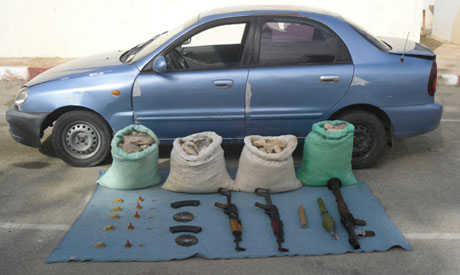 |
| One of the two cars found behind the church |
Mursi, who hails from the powerful Muslim Brotherhood, visited the Sinai peninsula in October to meet with and reassure Coptic families, telling them that “your security is our security”.
Egypt's Copts, who make up six to 10 percent of the country's population of 83 million, have regularly complained of discrimination and marginalisation and have also been the target of numerous sectarian attacks.
One of the worst incidents of violence occurred on January 1, 2011 when 23 people were killed in an attack on a Coptic church in the Mediterranean city of Alexandria.
Sinai, a scarcely populated peninsula home to lucrative tourist resorts in the south and shadowy Islamist militants in the north, is a major transit point for arms smuggling to Gaza which is ruled by the Islamist Hamas group.
Security in the desert and mountainous region collapsed after the uprising that toppled Mubarak.
Since his downfall, several militant attacks have targeted police and soldiers, including a brazen August 5 ambush on an army outpost that killed 16 soldiers.
The military launched a wide-ranging campaign after that attack to flush out militants, but drive-by shootings have continued.
Saturday, January 5, 2013
Amid Instability In Egypt, Coptic Christians Flee To U.S.
Coptic Christians will celebrate Christmas on Monday, and many will do so outside their native Egypt. Since the revolution there, their future in the country has looked uncertain, and many are resettling in the United States.
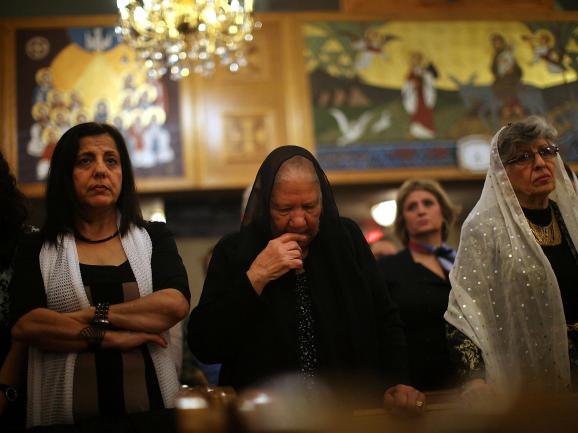 Their population in the U.S. may have grown by nearly 30 percent, according to rough estimates. One church that has felt its membership swell with new arrivals from Egypt is in the Queens borough of New York. St. Mary and St. Antonios Coptic Orthodox Church boasts more than 1,000 members, according to Father Michael Sorial.
"I would say probably in the past two years, our community has, if not doubled, quite possibly more than doubled in size," Sorial says.
The story is the same at churches around New York, New Jersey and Southern California, the centers of Coptic life in the U.S. since the early 1970s. Nationwide, researchers estimate that as many as 100,000 Copts have joined a pre-revolution population of around 350,000.
They're leaving continued instability in Egypt — uncertain economic prospects combined with ongoing violence.
Mariana Bolis is from Assiut, Egypt, home to a big concentration of Copts. Her father was a victim of this violence.
"He was a priest, and he was killed at home. So after this accident, I decided to leave Egypt and to go anywhere," Bolis says.
They call it an accident, but the family is clear about what happened: They say he was murdered by Muslims.
Bolis arrived in Queens with her husband and two children in mid-October. Like many of the new arrivals, they arrived on tourist visas and applied for asylum. In 2011, the number of U.S. asylum cases from Egypt doubled over the previous year.
Expenses here are hard even for well-off families like Bolis'.
"The rent is very high here in New York. Around 80 percent of my savings will go to the rent," says her husband, Gameel Gergis. "So it's a big problem for me."
He needs to get recertified to work as a pharmacist. Many other new arrivals end up taking jobs delivering food or stocking bodega shelves.
Fleeing Egypt
The Queens church is expecting a spike in immigration on the heels of a new constitution in Egypt that many say leaves Copts and other minorities unprotected. Ashraf Aweeda, a lay leader at St. Mary and St. Antonios, says his phone is ringing off the hook.
"I don't even know these people who call us — they getting their numbers from people they know in Egypt," Aweeda says. "They call and they ask us, 'How much money we should bring with us? What do we need to bring with us? What type of paperwork we need?' Everything. They wanted to know everything about living here."
The church is beefing up efforts to help people resettle — solve visa issues, get work and find housing, which is no small feat in New York City's tight real estate market.
Despite the challenges, most new arrivals plan to stay put. Many are from the educated middle classes that have traditionally anchored the community. But more and more are poorer, rural and less educated — facts that increase the struggle to start a new life.
At St. Mary and St. Antonios, the story of the Nativity has added poignancy this year. Fleeing danger, the story goes, Jesus, Mary and Joseph flee into Egypt. With a few days left before Coptic Christmas, many of these Copts are thanking God for helping them flee to the U.S.
--Reporter Bruce Wallace has the story of new immigrants flocking to a church in Queens, New York:
BRUCE WALLACE, BYLINE: Cymbals keep time with chanting at a recent service at St. Mary and St. Antonios Coptic Orthodox Church in Ridgewood, Queens. It's the end of Kiahk, the Coptic month before Christmas. A priest cooks his clouds of incense out of a golden sensor. People file in and out. Children shuffle between moms sitting to the right of the church and dad's across the aisle to the left.
TEACHER: They (inaudible) because of the census they went to Bethlehem.
WALLACE: In the basement the church elder walks 60 college-age church goers through stories of Jesus' birth. The small room is overflowing, so is the church.
FATHER MICHAEL SORIAL: I would say probably in the last two years our community has, if not doubled, quite possibly more than doubled in size.
JOEL ROSE, BYLINE: Father Michael Sorial says the small church now has over 1,000 members, its numbers ballooning with new arrivals from Egypt. The story is the same at churches around New York, New Jersey and Southern California, the centers of Coptic life in the U.S. since the early 1970s. Nationwide, researchers estimate that as many as 100,000 Copts have joined a pre-revolution population of around 350,000. They're leaving continued instability in Egypt, uncertain economic prospects combined with ongoing violence.
Mariana Bolis is from Assiut, home to a big concentration of Copts. Her father was a victim of this violence.
MARIANA BOLIS: He was a priest and he was killed at home. So after this accident I decided to leave Egypt and to go anywhere.
ROSE: They call it an accident but the family is clear about what happened. They say he was murdered by Muslims. Bolis arrived in Queens with her husband and two children in the middle of October. Like many of the new arrivals, they came on tourist visas and applied for asylum. In 2011 the number of U.S. asylum cases from Egypt doubled over the previous year.
Expenses here are hard even for well-off families like Bolis'. Gameel Gergis is her husband.
GAMEEL GERGIS: The rent is very high here in New York. Around 80 percent of my savings will go to the rent. So it's a big problem for me.
ROSE: He needs to get recertified to work as a pharmacist. Many other new arrivals end up taking jobs delivering food or stacking bodega shelves. The church expects a spike in immigration on the heels of a new constitution in Egypt that many say leaves Copts and other minorities unprotected. Ashraf Aweeda is a lay leader at St. Mary. He says his phone is ringing off the hook.
ASHRAF AWEEDA ST. MARY COPTIC ORTHODOX CHURCH: I don't even know these people who call us. They getting the numbers from people they know in Egypt. And, yes, they calling to ask us, how much money we should bring with us? What do we need to bring with us? What type of paperwork we need? Everything. They want to know everything about living here.
ROSE: The church is beefing up efforts to help people resettle, solve visa issues, get work and find housing. No small feat in this city's tight real estate market. Despite the challenges, most new arrivals plan to stay put. Many are from the educated middle classes that have traditionally anchored the community. But more and more are poorer, rural and less educated, facts that increase the struggle to start a new life.
At St. Mary and St. Antonios, the story of the Nativity has added poignancy this year.
TEACHER: She gave birth in Bethlehem and then the angel appeared to her to go where? Egypt.
ROSE: Escaping danger, the story goes, Jesus, Mary and Joseph flee into Egypt. With a few days left before Coptic Christmas many of these Copts are thanking God for helping them flee to the U.S. For NPR News, I'm Bruce Wallace in Queens.
Subscribe to:
Posts (Atom)

Subscribe To


 Posts
All Comments
Posts
All Comments
