Search This Blog

Image and video hosting by TinyPic
Showing posts sorted by relevance for query Elder Paisios. Sort by date Show all posts

Tuesday, December 4, 2012

The Wall Street Journal this morning: Elder Paisios


SOUROTI, Greece—Legend has it that nearly three decades ago, a bearded Orthodox Christian mystic visiting here made an unsettling prediction: Greece in the future would experience a "great disruption and confusion," followed by hunger and political turmoil.
Believers say this grim vision of Elder Paisios, an ascetic monk who died in 1994, was actually a prescient glimpse of the upheaval now gripping this debt-racked country—helping fuel a surge of interest in the Orthodox holy man by Greeks struggling to make sense of a brutal financial crisis.
Elder Paisios, who spent much of his adult life as a hermit on the monastic peninsula of Mount Athos in northeastern Greece, has become a popular sensation—with tales of his prognostications and miracles he is said to have performed posted online and recounted in popular books.
image
A book on Elder Paisios on display at an Athens bookstore.
On Saturdays, hundreds of pilgrims line up at Elder Paisios's gravesite here, waiting their turn to kneel, pray and kiss the wooden cross that marks his final resting place. They ask for help finding jobs, paying bills and surviving a downturn that has upended their lives.
"Paisios predicted many things, and his prophecies are now coming true," said Costas Katsaounis, a 41-year-old military officer on a visit to the shrine. "He foresaw the crisis. But he also said it would get better, that we will overcome and prosperity will return. He's helped a lot of people."
Elder Paisios's fame in some ways echoes that of Michel de Notredame, better known as Nostradamus, a 16th-century French apothecary who believers say foretold everything from the rise of Hitler to the terror attacks of Sept. 11.
"Figures like Paisios represent the shaman, the magician of the tribe," said Alexandra Koronaiou, a sociologist at Panteion University of Social and Political Sciences in Athens. "They are the incarnation of a transcendental, invisible power."
With Greece's economy in the fifth year of a grinding recession that is expected to deepen further in 2013, unemployment above 25% and even middle-class families struggling to feed their children, many Greeks feel like their society is teetering on the brink of collapse, and they are seeking solace.
"When there is an event that brings an entire country to its knees, people look for a religious explanation," said Vasilios Makrides, a religious-studies professor and specialist on Orthodox Christianity at the University of Erfurt in Germany. "They are seeking support from the supernatural."
That is driving a fresh boom in all things Paisios. The elder's wizened and bearded face, peering out from below a black cap, adorns devotional banners and cards inscribed with inspirational messages.
Bookstores stock dozens of Paisios-related titles, from books detailing his spiritual teachings to volumes filled with his commentary on everything from the coming of the apocalypse to Greece's retaking of Constantinople, once the seat of Byzantine emperors and now Istanbul.
[image]


A woman prayed at the mystic's grave in Souroti.
"They sell like crazy," said Ionnis Aivaliotis, who works at the Zoe religious bookstore in downtown Athens. "Even nonbelievers are starting to read them. It gives people courage to withstand what's coming."
There is a Paisios diet guide—he was very thin—and a kids' book, "Once Upon a Time, Children, There Was Elder Paisios."
Over the past two years, conservative newspaper Dimokratia has sold 350,000 copies of Paisios-related titles—from compilations of his prophecies to his views on education. Other newspapers carry accounts of his reputed miracles.
Elder Paisios, born Arsenios Eznepedis in central Anatolia in 1924, is part of a long tradition of monastic spirituality that believers say confers a power of divination—to see things others cannot, to interpret signs and predict the course of events.
Even before his death in 1994, he was well known in religious circles, drawing the faithful to Mount Athos for spiritual guidance and advice. Many expect that he will eventually be canonized. (A church spokesman declined to comment.)
But the recent increase in attention has prompted a backlash from skeptics and drawn cautions from some in the Greek Orthodox Church hierarchy.
"People are looking for somewhere to turn," said the Rev. Vasilios Havatzas, head of the church's charitable operations in Athens. "But some are overreacting. They are making him into some kind of prophet," he said, adding: "That doesn't mean everything he said is right."
But in a sign of the broad support for Elder Paisios, Greek police arrested 27-year-old Phillipos Loizos for creating a Facebook page that poked fun at Greeks' belief in the miracles and prognostications of the late monk. He was charged with blasphemy and insulting religion. The blasphemy charge was later withdrawn.
Police received thousands of complaints about the page on the social-networking site for Elder Pastitsios, a play on the monk's name. Pastitsio is a traditional baked pasta dish similar to lasagna. An ultranationalist lawmaker condemned the page in Parliament.
Mr. Loizos said he was using satire to criticize the commercialization of the monk and his message.
Many of Elder Paisios's purported prophecies resonate. "The people will be so disappointed by the politicians of the two big parties, that they will get sick of them," is one that rings true in an era when voter support for the country's two mainstream parties, blamed for the crisis, has dropped sharply.
Some of the elder's reported remarks hint at dark conspiracies—among them that the world is ruled secretly by a cabal of five people. He also predicted national triumphs for Greece, saying that Greeks would defeat Turkey, rule Constantinople and take part of Albania.
"Holy people like Elder Paisios are born once in a thousand years," said Nikolaos Zournatzoglou, who has compiled three books of the elder's pronouncements. "He was a gift from God and the Virgin Mary for humanity."
image
In Souroti, about 20 miles from the northeastern Greek city of Thessaloniki, busloads of pilgrims arrived one Saturday recently to see the elder's grave. Young and old, they prayed and took pictures. Some plucked a leaf of basil from a plant growing near the simple cross at his head.
Afterward in a gift shop in the basement of the rough-hewn stone church, visitors bought postcards, plaques with images of Elder Paisios and books by and about him, along with icons, crosses and other religious paraphernalia.
"There's a lot of uncertainty now. We don't know what is going to happen," said Anastasia Constantinou, a waitress visiting the shrine who said her family has had to cut back on meat, on driving their car and on other normal activities as their income has fallen amid the downturn.
"People find consolation in faith," Ms. Constantinou, 32, said. "Even though everyday life is difficult, Paisios gives strength to people. He helps them hold on."


Sunday, March 13, 2011

Elder Paisios of Athos- Beloved Spiritual Father


On Pain of Heart
First of all, Elder Paisios tells us that, for love to blossom in the heart, we must pray with pain of heart. Once he was asked, "We pray, Elder, and our thoughts go here and there. Why?"
"Because it is prayer without pain!" replied the Elder. "To pray with the heart, we must hurt. Just as when we hit our hand or some other part of our body, our mind (nous) ("Nous: the highest faculty or power of the human soul, called by the Holy Fathers "the eye of the soul," St. John Damascene, and "the spiritual nature of man," St. Isaac the Syrian) is gathered to the point we are hurting, so also for the mind to gather in the heart, the heart must hurt."
The Elder was then asked, "How can we preserve ourselves in this state when we don’t have some problem, some pain?"
He replied, "We should make the other’s pain our own!! We must love the other, must hurt for him, so that we can pray for him. We must come out little by little from our own self and begin to love, to hurt for other people as well, for our family first then for the large family of Adam, of God" (Athanasios Rakovalis, Talks with Father Paisios (Thessalonica, Greece: Orthodox Kypseli, 2000), pp. 123-24).
At another time the Elder said, "The more one hurts, the more divine consolation one receives, because otherwise it is not possible to stand the pain... God especially consoles those who hurt for others" (Ibid.,p. 124).
To his spiritual children the Elder wrote: "To some people your love will be expressed with joy and to others it will be expressed with your pain. You will consider everyone your brother or your sister, for we are all children of Eve (of the large family of Adam, of God). Then, in your prayer you will say: ‘My God, help those first who are in greater need, whether they are alive or reposed brothers in the Lord.’ At that point, you will share your heart with the whole world and you will have nothing but immense love, which is Christ". 
(Elder Paisios of Mount Athos, Epistles, p. 50).

On Distrusting Thoughts
Secondly, Elder Paisios tells us that, if we are to grow in love toward our fellow man, we are to cut off those thoughts and feelings which are an offense against love: that is, judgments and resentments. He counseled that "We should never, even under the worst circumstances, allow a negative thought to penetrate our soul. The person, who, under all circumstances, is inclined to have positive thoughts, will always be a winner; his life will be a constant festivity, since it is constantly based on positive thinking" (Priestmonk Christodoulos Aggeloglou, Elder Paisios of the Holy Mountain Mount Athos, Greece, 1998, p. 31).
One of Elder Paisios’ spiritual sons recalls, "Elder Paisios always urged us to think positively. Our positive thinking, however, should not be our ultimate aim; eventually our soul must be cleansed from our positive thoughts as well, and be left bare, having as its sole vestment Divine Grace granted to us through Holy Baptism. ‘This is our aim,’ he used to say, ‘to totally submit our mind to the Grace of God. The only thing Christ is asking from us is our humility. The rest is taken care of by His Grace.
"‘In the beginning, we should willingly try to develop positive thoughts, which will gradually lead us to the perfect good, God, to Whom belongs all glory, honor and worship. On the contrary, to us belongs only the humility of our conceited attitude’ " (Ibid., p. 29).
Elder Paisios’ teachings on thoughts and inner watchfulness, drawn from his own profound experience in the spiritual life, are particularly crucial for us who have been formed by modern Western culture. Because he spent so much time listening to people (both monastic and lay) and helping them with their problems, Elder Paisios became acutely aware of the various spiritual diseases afflicting modern Western man. Above all, he recognized — and sought to treat — the most prevalent disease: rationalism. Although the modern rationalist worldview was born in Western Europe during the Enlightenment era, it has progressively been inundating the entire world, including Orthodox lands such as Greece. Therefore, when Elder Paisios speaks to the spiritual malady of rationalism in contemporary Greece, he is also speaking to our spiritual malady in America and the West.
Ultimately, the malady of modern rationalism comes down to one essential ingredient: trusting the conclusions of one’s logical mind. We of the modern West have been raised with an underlying assumption, summed up in the well-known phrase of Rene Descartes at the beginning of the Enlightenment era: "I think, therefore I am." The worldview of modern rationalism, having lost an awareness of the immortal soul in man, leads us to believe that our thoughts are v/ho we are, and, conversely, that we are the sum total of our thoughts. Therefore, we automatically feel that we have to trust our thoughts, to take a stand for them, to defend them as we would our own flesh and blood.
This is the essential fallacy of the modern worldview. It is precisely by placing absolute trust in the formulations of the fallen human mind — rather than in divine revelation — that modern Western man has come to water down or abandon his once-cherished Christian Faith. We Orthodox Christians living in the West must act against this influence by refusing to accord outright trust to our thoughts.
Elder Paisios teaches: "The devil does not hunt after those who are lost; he hunts after those who are aware, those who are close to God. He takes from them trust in God and begins to afflict them with self-assurance, logic, thinking, criticism. Therefore we should not trust our logical minds. Never believe your thoughts.
"Live simply and without thinking too much, like a child with his father. Faith without too much thinking works wonders. The logical mind hinders the Grace of God and miracles. Practice patience without judging with the logical mind."
Elsewhere Elder Paisius counseled: "We ought always to be careful and be in constant hesitation about whether things are really as we think. For when someone is constantly occupied with his thoughts and trusts in them, the devil will manage things in such a way that he will make the man evil, even if by nature he was good.
"The ancient fathers did not trust their thoughts at all, but even in the smallest things, when they had to give an answer, they addressed the matter in their prayer, joining to it fasting, in order in some way to ‘force’ Divine Grace to inform them what was the right answer according to God. And when they received the ‘information,’ they gave the answer.
"Today I observe that even with great matters, when someone asks, before he has even had the time to complete his question, we interrupt him and answer him. This shows that not only do we not seek enlightenment from the Grace of God, but we do not even judge with the reason God gave us. On the contrary, whatever our thoughts suggest to us, immediately, without hesitation, we trust it and consent to it, often with disastrous results.
"Almost all of us view thoughts as being something simple and natural, and that is why we naively trust them. However, we should neither trust them nor accept them.
"Thoughts are like airplanes flying in the air. If you ignore them, there is no problem. If you pay attention to them, you create an airport inside your head and permit them to land!" (Ibid., pp. 29-30, 48).


Friday, November 18, 2011

Elder Paisios - Wondrous events


 Father Paisios always wished for the grace of God to function in his life, and for this reason, he humbled every single one of his wills. As a result, divine grace, which abided in the Elder’s soul since the day he was baptized, was activated and worked miracles.

The Elder always tried to hide from people the energy of divine grace hidden inside him. When divine grace was functioning within him and was perceived by some people, Father Paisios humbly admitted that he himself did nothing; for he had very well understood –since he was very young- that it was impossible for any authentic spiritual energy to come out of him.
Most of the times, he covered up the energy of divine grace, so people could not detect it. There were times, however, when people needed a “divine push” instead of human assistance in order to believe in God and thus correct themselves; then, he was forced to disclose the energy of the divine grace.

A series of volumes is required in order to present, even to the slightest degree, whatever was overflowing from the spiritual activity of the Elder. The following are only a few indications of wondrous events witnessed by priestmonk Christodoulos, who is the author of the book “Elder Paisios of the Holy Mountain” (1998).


One afternoon, I went to see Father Paisios. During these days, I was possessed by a certain haughtiness which was derived from the lack of warmth in my poor prayer life. When I began to control my unrestrained mind, I started seeing things more lucidly. However, as I did not have a humble attitude, I thought I had reached a certain spiritual state and I was bragging about it.
I went to see the Elder to confide in him my thoughts, which were imbued by the sense of haughtiness I just described. Father Paisios listened to me and without saying anything in specific, started telling me the following story:

-Yesterday, a monk visited me and told me something which made me recall the incident I am about to tell you.
One night, I was in my cell at Katounakia saying the Jesus prayer and gradually I was possessed by a heavenly joy. Simultaneously, my cell, whose darkness was interrupted only by the trembling flame of a candle, was filled with a beautiful white-blue light. At the beginning, the light was very strong. I felt that my eyes were also “getting stronger” in order to withstand the glow. It was the Uncreated Light! I stayed in my cell for many hours, losing sense of all earthy things and living in a spiritual world, very different from this one.
While being in this state of the Uncreated Light and heavenly experiences, I lost all sense of time.

At one point the Uncreated Light started fading away and I was back to my old state of being. I began to feel hungry, so I took a piece of bread to eat. Then, I was thirsty and had some water to drink. I was getting tired and I needed to sit down and get some rest. I felt like an animal and I deplored myself for it. The change from one situation back to the other gave birth to a natural humbleness. Having experienced the difference between the spiritual state I was found in and my earthly needs, there was nothing left for me but to despise and blame myself for it.
Further down from my cell, another monk was residing. I looked outside and had the impression it was still night with a full moon. I went out and asked him:
-What time is it? It seems that dawn hasn’t broken yet this morning.
The monk looked astonished and asked me:
- What did you say, Father Paisios? I didn’t understand.
Only then, I realized what had happened. It was ten in the morning and the “full moon” I thought I had seen was the sun. The Uncreated Light was so strong that it made daylight and the sun look like a night with a full moon. The difference between the light of the sun and the Uncreated Light was like the one between night and day.
When the Elder finished his story, he told me to go, as there were other people waiting to see him. I made my way back to my cell only slightly realized my beastly state of being.

After the Turkish invasion in Cyprus, a Cypriot deacon monk went to visit the Elder, as he was feeling very sad about the terrible destruction and great loss of lives. (He had also lost some of his relatives).
Father Paisios was fond of him because he was a very pious and kind man and asked him to spend the night at his cell.
- In the morning, the priest will come to serve the Divine Liturgy. I will wake you up early, so we can chant the Matins service and read the prayers of the Holy Communion service.
The deacon went to his cell and the Elder to his own, where he prayed all night. A couple of times, he went to knock on the deacon’s door and jokingly said:
- Father, did you, by any chance, have a vision? Did you see an angel?
Around two o’ clock in the morning, Father Paisios woke him up to start the Matins service. At one point, the Elder began to read the service of the Holy Communion. The deacon was watching the way Father Paisios was reading, and how his face was full of compunction and piety.
When he reached the hymn of the fifth ode which says: “O Mary, Mother of God, the sacred tent of fragrance, through your prayers, make me a chosen instrument that I may partake of the holiness of your offspring”, something extraordinary happened:
The little chapel was filled with a white-blue light and the oil lamps, whose red flames became light-blue as well, began to move in a slow rhythm. At the same time, the whole chapel was permeated by a heavenly fragrance beyond description.
The deacon was astonished and could not understand what was going on. He interrupted the Elder, whispering to him:
- Father, what is happening?
He made a signal for him to keep silent and told him:
- Say the Jesus prayer and do not talk, because the Virgin Mary is visiting us.
For quite some time, the Elder and the deacon remained with their heads on the ground, until the white-blue light faded away taking along with it the sorrow and grief from the deacon’s heart. In their place, there was joy, hope, faith and love for God, but also gratefulness towards the Elder who was the recipient of the grace of God. Later on, the priest came to serve the Divine Liturgy. In the morning, the deacon left with a feeling of admiration for the spiritual boldness Father Paisios had before God.

Father Paisios was going through a very difficult phase. A problem was created in the Church at that time and many bishops had gone to him to ask for his help. However, it was a very complicated problem and even if he wanted to, he was unable to assist; as he said, no matter from which side you look at the problem, you come face to face with a spiritual impasse. So, he decided to turn his efforts to solve the problem into prayer. During that time, Father Paisios constantly prayed for God to give solution to the Church’s problem; especially, he prayed to St. Ephemia:
- St. Ephemia, you who miraculously solved the serious problem the Church was facing then, take the Church out of the present impasse!
One morning, at nine o’ clock, when Father Paisios was reading the service of the third hour, he suddenly heard someone discreetly knocking on his door. The Elder asked from inside:
-Who is it?
Then, he heard a woman’s voice answering:
- It is me, Ephemia, Father.
-Which Ephemia? He asked again.
There was no answer. There was another knock on the door and he asked again.
-Who is it?
The same voice was heard saying:
-It is Ephemia, Father.
There was a third knock and the Elder felt someone coming inside his cell and walking through the corridor. He went to the door and there he saw St. Ephemia, who had miraculously entered his cell through the locked door and was venerating the icon of the Holy Trinity, which the Elder had placed on the wall of his corridor, on the right hand side of the church’s door.
Then the Elder told the saint:
-Say: Glory to the Father and the Son and the Holy Spirit.
St. Ephemia clearly repeated those words and immediately Father Paisios knelt and venerated the saint.
Afterwards, they sat and talked for quite a while; he could not specify for how long, as he had lost all sense of time while being with St. Ephemia. She gave the solution for all three matters he had been praying for and in the end he said to her:
- I would like you to tell me how you endured your martyrdom.
The saint replied:
-Father, if I knew back then how eternal life would be and the heavenly beauty the souls enjoy by being next to God, I honestly would have asked for my martyrdom to last for ever, as it was absolutely nothing compared to the gifts of grace of God!

When the Elder was still residing at the cell of the Holy Cross, one night, as he was saying the Jesus prayer, suddenly the roof of his cell was removed and in its place he clearly saw the Lord. His face was so bright that he could not look straight at Him and wondered how it was possible for some people to once split on it.
After this incident, the Elder gave instructions to the nuns of the Convent of St. John the Theologian, who were painting icons, to paint the Lord just the way he had seen Him that night. During the whole time they were painting the icon, he was by their side guiding them.
Father Paisios said that the face of the Lord and the Virgin Mary had the color of ripe wheat.

Father Paisios had already dug his grave next to his cell, Panagouda, and his mind was always set on the day he would depart from this transient world. Due to his deep sense of humility, he constantly felt unprepared for his last journey. However, a vision he saw filled him with joy.
While he was praying, he saw that he was in a place, which looked like an airport, where people departed for their journey to heaven. There were many people, some of whom were assigned to check if the travelers had passports and tickets with them, so they could travel; if either one was missing, they stayed behind. When it was the Elder’s turn, he realized he did not have the necessary documents. Suddenly, the Virgin Mary appeared dressed in gold like a queen. Her appearance was exactly the same as on the icon of the Virgin Mary of Jerusalem. She said to the inspectors:
- He is my own servant. Let him pass for I have all his documents ready.
She took them out of her pallium and after showing them to him, she put them back in their place. So, they let Father Paisios go through.
Father Paisios once told us:
- The Virgin Mary looks a lot like the one on the icon of the Virgin Mary of Jerusalem. She is exactly the same. I have seen her many times and I don’t know of any other icon resembling her so much.

Once, while Father Paisios was praying with his Komvoschinion (prayer rope), he experienced a divine visitation. Suddenly, he heard footsteps coming from the corridor of his cell. He went to the door and looked at the corridor facing the door of the chapel. He saw the Virgin Mary, walking like a queen. When she reached the door of the chapel, she went in. St. John the Theologian followed behind her. After they both entered the chapel, they disappeared leaving behind them a white-blue light, the Uncreated Light, which after a while faded away. Father Paisios’ soul was overflowing with gratitude and humbleness. He was crying because the Virgin Mary had visited him, even if he himself felt that he was the most sinful person in the world.

Father Paisios had a funny way of informing us of the weather report. Father David was the gate keeper at Koutloumousiou Monastery. When one of the monks or novices were returning to the monastery, after having visited Father Paisios, he used to tell them:
-Tell Father David to get off the almond tree, because it will snow.
(He said that because righteous David of Thessaloniki did his spiritual exercise by living on an almond tree and this way he was sanctified.)
Whenever he gave that message to Father David, it always snowed a few days later. So, we knew when to expect snow and were able to prepare ourselves for it.
In December 1992, Father Paisios sent a message to Father David “to get off the almond tree” and “climb on it” again after Christmas. The holidays went by and he sent another message telling him “not to climb on the almond tree” yet, but to wait until he notified him. On St. Anthony’s day (17 January), the weather was very bad and it snowed. A few days later, he told him that he could now “climb on the tree”.
Thus, we always knew when it would snow through Father David, for the Elder “informed” him accordingly.

Six fathers and I were sitting on the grass outside the Elder’s cell listening to him talking. All of a sudden a young man, who looked like an anarchist with long hair and a scarf around his neck, arrived. He asked somewhat impolitely:
-Where is this Paisios?
The Elder stood up, went close to him and told him:
-What do you want him for, young man?
-I want him, he replied.
The young man had a pack of cigarettes in the left pocket of his shirt. Father Paisios pointed at it and asked him:
- What do you have in here, the Gospel?
- No, cigarettes, he replied, and offered him one.
-Do you want one?
-No.
Since we were all looking at the Elder laughing, the young man understood that he was Father Paisios. After confirming it with us, he turned to him and asked:
- I want you to tell me what is my name.
The Elder, scratching his head pretending to be bewildered, said:
- What is your name…, let’s see. How do you call the traffic lights, the red and the green ones that regulate the traffic? (Greeks have named the green and the red light after men’s names, Grigoris and Stamatis respectively).
-You mean Grigoris and Stamatis, the others replied.
- Well, yes. This is how you are called.
His name was indeed Grigoris and when he heard it, he was astonished and immediately asked to see the Elder in private. He took the young man aside so the two of them could talk.
After six months, he went again to Mount Athos and I met him outside Koutloumousiou Monastery. He no longer looked like an anarchist. His change was so dramatic that I was not sure if it was the same person, so I asked him:
- Excuse me, you remind me of someone. Are you the young man who visited Father Paisios about six months ago?
-Was the person I remind you of rude to the Elder?
- Yes, in a way.
- It was me the idiot, Father. Pray for me so I can correct myself.


The Elder was sitting outside his cell talking to a group of pilgrims. Father E. was watching him talk, and was wondering with admiration:
-How is his soul related to divine grace and how pure it must be in order to allow the grace of God to function?
While he was having these thoughts, Father Paisios interrupted the discussion he was having with the others, and said to him:
- Are you wondering how it looks like inside? It is full of dirt and stench.
And he then continued his discussion. The pilgrims did not understand what the Elder meant by these words, but Father E. was astounded.


Thursday, May 10, 2012

An extraordinary meeting with Elder Paisios seven years after his death!

Introduction
Some comments made by Misha: This letter was received in 2006. It was kept hidden because of personal reasons by its recipient. Today the time has come to publish it after getting the permission from its author.
A friend, G, met Fr Paisios, whose existence he was not aware of, in 2001(seven years after the elder’s passing), when G went on a pilgrimage to the Holy Mount Athos. The following letter describes the beautiful circumstances of the meeting, the conversation and his acquaintance with Elder Paisios.
I would like first to give thanks to the Lord, for people like Elder Paisios, and especially for dear G, who so openly entrusted me with the details of his acquaintance with Elder Paisios. I pray that Our Lady and the Elder will protect him and his family now that he is in foreign land.

My friend Misha, Hello!
Finally, almost five years later the story of my meeting with Elder Paisios is coming to a positive conclusion and therefore I can finally draw the line and find some peace at last. It is impertinent that I share this experience with someone. Especially since this someone is you, who have already met Fr Paisios. Even here, I can discern his intervention. I only want from you to listen to the whole story as a form of confession. I am certain that you will show the necessary understanding like no one else would. This is enough for me. I will also include some pictures with my story, since a picture is worth a thousand words.

25 November 2001
The path towards the Holy monastery of Karakallou: a few hours before I met with Fr Paisios. (The picture has been changed a little by the recipient to protect the privacy of the author)
I met the Elder at a similar point on the path, and he was dressed in exactly the same way. The only difference with the picture is that during the day of the meeting, the day was cold and dull and there was some snow on either side of the road. It was also especially muddy since it had only recently been cleared of the snow. At this point the road was coming into a V shape. I was getting ready to follow the left path towards the beach, since I had wrongly assumed that the monastery was close to the beach.
The Elder suddenly appeared and after telling me “You are not going in the right direction, follow me” he began taking the right hand side of the road. While I was following a few steps behind, I was wondering why on earth wasn’t he freezing since he was so thinly dressed. And also: “Why his shoes weren’t so muddy like mine were?”
I was impressed by how quickly he was walking. I had started losing my breath and I felt relieved when he finally told me: “Follow this path and Christ and our Lady will protect you. I will return to my Skete”. Beforehand, he had also commented that “they use the bulldozers and destroy the paths of the Holy Mountain” and asked me: “Is it snowing in I…?”
It all lasted more or less ten minutes.
When we each went our way, I felt that something completely strange had happened but I could not fathom what it was.
I left the Holy Mount Athos on the 15th of December. Just as the ferryboat was being towed away from the Daphni dock, I felt utterly and deeply pained for leaving. Five years later, I know now that a huge part of me is still there.
I celebrated Christmas and the New Year 2002 with my family. Afterwards, I picked up my rag sack and went off once again.
The pain of being away from Greece was very strong once again. The years go by and the possibility of never seeing Greece again was becoming more real.
(A personal account follows for the years 2002-2003)
The pain was not as tough now, but the remembrance of my meeting with Elder Paisios was getting stronger. This led my brother to tell me on the phone once: “Please, let’s not start with this monk again!”
(More personal details follow regarding 2003-2004)


During the Olympics I had the incredible urge to build a small chapel in our place. My desire was very strong even though I had never been openly religious.
My relationship with the Church was formal. I was just showing respect for my religion and the Church and nothing more.
During the autumn of 2004 I started drawing the design and gathered together all the materials. In 2005, I built the chapel inside the room I used to have as my hobby/computer room.
Everything was going well and I was enjoying myself. It was strange but sometimes the room was filled with some wonderful scent, and I didn’t know where it was coming from. My wife could not smell anything. I built it piece by piece, using good quality cement and I hope it will last for many years to come.
I finished beginning of May 2005 and took all the pieces down to the garden in order to put them together. Beginning of August 2005 everything was ready. They sent me a small bell from Greece, some Holy water from the Church at Spata and some oil from Saint Efraim’s oil lamp.
On the 15th of August we inaugurated the Church and devoted it to our Lady. We called it “The Omnipresent Lady”

Ekklisoula.jpg

The icons have been sent as gifts from my family in Greece. Then all of a sudden weird things started happening.
During the following day, I was working at my computer. I often work with many pages simultaneously. When I finished and was closing the pages, the Elder’s picture showed up, which I had been searching for, for so long. I still didn’t know his name. I was so shocked that I immediately picked up the phone to speak to my sister: “I found the monk. He has been showing me his shoes, as if he was asking me ‘do you remember me?’ ” I also told her that I would send her a picture to show to our parish priest, in case he knew who he was. My sister, who is more down to earth, told me that it looks like he is either going to show up again or give clues as to his identity.

A few days later, I listened purely by chance to Manos Tsimilides’ programme
‘Agrypnos’ on ΝΕΤ. I heard him tell one of his listeners who was looking for the saints of the day, to look up in www.eortologio.gr. I curiously looked up the page, a truly wonderful one and very useful for people like me. I then wrote
something entirely common in the Guestbook. Ten days later I received an e mail from www.kivotos.1821.gr in which they were informing me about their website. I replied asking them ‘where did they find my address’ and they replied: From the eortologio.
I very much like the site ‘kivotos Help’. They are wonderful people. I especially like the answers they give to their members’ questions. We went on to exchange some very interesting e mails. In one of them, I referred to the difficult times the modern Greek family is going through. They agreed with me and said: “Especially now that Elder Paisios is not with us anymore, to help…” I asked who exactly Elder Paisios was and they said that he was one of the best and most loved Hgiorites of recent years. They sent me two pictures. I thought that it was the right time to ask them about my elder and I sent them his pictures. I am sure they thought that I was mocking them. They simply send me his address:

I visited the page but I still didn’t know his name in order to ask of him. I surfed in the internet many hours before I finally came to realize that my elder, was indeed Paisios. I believed that he had died after our meeting on the Holy Mountain on the 25th of November 2001. I asked for some more details and a brief resume of his life at the Forum of ‘athos edo’.
G angelos replied with a brief account of his life and recommended the book which hiernmonk Isaak had written. When I read about the date the elder had passed away, it was as if I had been hit by a thunderbolt. Even my wife realized it and asked me what had happened.
I asked for the book to be sent from Greece. It is one of the most difficult ones I had ever read. It has affected me a lot. It is difficult for me to grasp all those willing hardships that he had imposed upon himself. The strength of his will was something unbelievable.
This is shortly my account of the meeting with Elder Paisios. I have no doubt that he had saved my life at that time in the Holy Mountain. He now does the same by leading my life slowly towards salvation. It has been difficult for me to write this letter to a stranger. It is something I have never done before. I would just like to show that I am not being fanatical, or rather that I have not gotten on a high horse. I am a normal person with my weaknesses…( some personal details are given here)
Many the Lord have mercy on me.
It is strange but something inside me tells me to trust you. It is something I cannot explain. But during the last few years, so many things have happened which I cannot explain anyway. I leave it up to you to consider if it is worth publishing this story. I think I owe it to him, that people should learn about this story. You may use my letter and the pictures as they are or you can tamper with them as you see fit. I hope I didn’t pester you with my rambling. I wish you all the best. Have a nice weekend.
Kind regards,
G.

Some further comments made by Misha:
All the personal details of my friend G are available to everyone. The letter in its entirety (and the parts which we have today left out) will be handed over to the right place so that it can be evaluated and presented for the benefit of those who respect the Elder. I ask all those friends who may wish to reproduce it to preserve its content and name its source in order to prevent things like “the malfunctioning phone” which often appears in personal account stories.


Saturday, October 5, 2013

The truth about the «Lucky Bread» of Elder Paisios


Did Elder Paisios have a recipe for "lucky bread"? Some are arguing that not only did he create it, but they have it. But what is the truth about this "lucky bread" of the Athonite Monk?

Saturday, March 19, 2011

Elder Pasios and Snake

A group of six people went to Mount Athos to meet and learn about the Elder Paisios the year 1974, one week before the Turkish invasion of Cyprus. 

A group of six people went to Mount Athos to meet and learn about the Elder Paisios the year 1974, one week before the Turkish invasion of Cyprus. Then it was even known as the Elder.
 Visitors followed a narrow path full of undergrowth and found a hut. They saw an old man in robes and dig the ground. Someone in the group asked:
alt -Where is Elder Paisios?
 -Here is the old man replied.
 They opened the door, entered and bowed. When they came out, saw the monk more tidy. And she, who had asked for the first time, he asked again:
-Where is Father Paisios?-Eye coming to see a large karpouzikai found a gourd, replied the monk. Everyone knew then that they were in front of Father Paisios.
They sat beneath an olive tree, other stones and others in the grass. What followed is described. The debate was a spiritual experience. He was most appropriate, enlightened and spiritual response to questions and queries episkepton.Meta discussion one hour, through the undergrowth, appeared a huge snake. endrogalia should be.
 -Snake, Snake yelled someone from the company and was thrown up getting a petrasto hand. Elder reassured them by saying:-Do not tease, this is me hanging. He got up, took a can of the water filling and left further. After the snake drank water, father Paisios said to him:
 -Get out now, I have company. Immediately the snake, obedient, silently lost in the grass, as it occurs. All were shocked. This fact and the discussion that preceded were drawn deep into their souls. In addition to the Elder noted prophetic events which followed the Turkish invasion of Cyprus.   
 Source: Book: Life Elder Paisios of Mount Athos, Simon Monk.

Friday, November 18, 2011

Testimony by regarding Elder Paisios

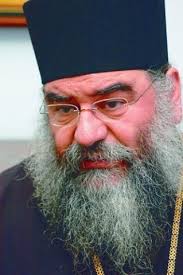
Metropolitan Athanasios of Limassol

To begin with, since I never imagined that a time would come when I would narrate Father Paisios' life―and he himself never related his life all the way through―there may be some gaps regarding dates and  events. Only out of gratitude towards the Elder did I accept to come here Mr Nikolaidis, to this television station, so as to give my own testimony about his holy life, his presence within Orthodoxy, within our Church, about all the things I saw during my stay on Mount Athos, and everything else trustworthy people have told me. These are the things I will talk about, feeling, of course, that narrating the lives of holy people is an extremely difficult task. It is particularly difficult because the Elder was truly a holy person, and we are nothing and have understood very few things. Let us at least hope that God help us relay the facts as we witnessed them and the people that are listening to evaluate them according to their own disposition.    

I met Father Paisios in 1976, in September. I visited Mount Athos for the first time, and there, together with the rest of my classmates, we visited the Elder, when he resided in his small hut at Timios Stavros (Holy Cross), near Stavronikita Monastery. I met him there. I must say, we arrived curious to see the Elder, about whom we had heard so much. He received us with much love, and I must say that our first meeting disappointed me a little in the beginning because I was not familiar with the secrets of these spiritual people. When I saw the Elder, who received us in such simplicity, he gave us various treats and told us jokes and laughed. I started to doubt that this man was truly as much a saint as he was considered, because I thought saints were meant to be silent, not talkative and glum. I was under this impression. But afterwards, the truth refuted us, as the elder spoke of things we had never heard of before, and he had his own life as a testimony. 
The first incident which I testify to in all honesty, is that when we were greeting him goodbye and kissed his hand, something happened that truly was God's intervention. All the mountains, all the surrounding atmosphere overflowed with an indescribable fragrance. The whole area smelt fragrant. The Elder realized this and immediately recommended that we get on our way, while he headed towards his cell. We, the three kids that we were, set off for Karyes without perceiving what was happening, feeling an indescribable joy inside, which had no a explanation. We neither understood the reason we were running, nor the reason the surrounding mountains, air, rocks, and everything smelt sweet. What I experienced the first time I met Father Paisios was moving. 
He spent his childhood in Konitsa. He once recounted to us that when he was fifteen years old he used to withdraw into the woods, where he had built a place using wood and twigs―like a hideaway for prayer―and there he  prayed in tears. This of course, was an energy of Grace. He felt this sweetness and wished to stay alone and pray to Christ. And as he was praying, he saw Christ right in front of him (not in his sleep but while awake), and Christ had His hand on the open Gospel and spoke to him, while at the same time the things He said were written in the Gospel. And He told him:
"Arsenios, I am the Resurrection and the Life. The one who believes in Me will live even if he dies." This experience of Christ's appearance was―as far as I know―the first of young Arsenios' in the sphere of supernatural revelations and possibly, the most decisive sign of his later path of monasticism.
The elder carefully avoided any talk around his name, and I can say that the only times he used to become strict―so much so that one would feel afraid―were when someone talked about him, recalled or mentioned miraculous incidents relating to him.
When I visited him in 1976, I said. “Elder, you have a great reputation out in the world*; people think well of you, well of your name.” He replied laughing, as he usually said in jokes and in a very cheerful and wise manner: “Now when you were coming from below, did you pass by the garbage dump?” (the one in Karyes). I said: “I did...”. “There in the garbage dump of Karyes there are quite a few squid tins. And there, when the sun falls over them, they shine. That's what has happened to people. They see the sun shining off the tin, which is me, they think it's gold. But, my child, if you approach close, you see it's a squid tin.” He said this, having fun with it. 
Later on though, when we were talking seriously, sometimes he would sorrowfully say: “Father, my greatest enemy is my name. Woe to the man and the monk that 'gains a name for himself'. Because after that he doesn't even have peace, but people also start to make things up, which many times are not realistic, and he becomes a point of conflict.” Hundreds of people visited his cell. As soon as the bus arrived in Karyes and they received their lodging passes, they immediately all headed to Father Paisios. You would see a caravan of people heading that way. He was their first target, their first stop. Sometimes when I happened to be with him, and he would not open, I wondered [why]. Then he used to say to me: “Look, we will pray and if God tells us, we'll open.”
He was a man whose greatest work was prayer. Only later on did he dedicate himself to people. Despite all his hardships, his ordeals, he was a fleshless man: a man that did not know sleep or rest. He was always in a good mood, and he always retained love in his heart to receive people's pain. I remember during Christmas of 1981, I went to visit him after Christmas vigil. We talked, and he explained to me what a great thing God's love is. He used to say that God's love resides in man like fire. He told me: “A few years ago this love burned so intensely inside me that my bones were melting like candles. And in fact, once, so much Grace fell on me that as I was walking, I knelt and could not continue. I was also afraid that someone would see me and not understand what was happening to me.” Eight years later, this great love turned without abandoning him, of course, into a great pain for people. It seems that from then on, the Elder dedicated himself to people in distress, after having been made God's habitation.        
Father Paisios was visited by people of all classes: educated and uneducated, bishops and many professors, even people of other faiths and every type of person.
In general, the places he lived cannot be described: The Cell of the Holy Cross was such a remote cell that I recall, as far as the eye could see all around, we did not see any other monk's cell. Desert. I recall the Elder used to say to me: “If you hear any sort of noise during the night, do not be afraid. It's wild boars and jackals”.
It is a fact that the Elder passed through many illnesses throughout his life. And I remember that when he suffered severe headaches, he used to place patches on his forehead, to restrain the headaches. Once in a while when we also got sick, he said: “Listen father, my sickness has been more beneficial to me than my health.”
And despite his illnesses, he would never neglect his duties. It is amazing that up until complete exhaustion he continued his fight. I recall we attended a vigil in the monastery for Christmas, which lasted approximately ten hours. The Elder received people all day and did not rest at all. All night during vigil he was standing. I sat right next to him and waited to see when he would sit. He did not sit at all all night; he remained standing. At some point he said to me: “Why don't you move a little further over? Are you a policeman?” He understood that I stood next to him to examine what he would do. 
His love was infinitely and richly evident to everyone who visited him, especially to those in distress and to the youth. I remember something I experienced vividly in 1982, when a youth visited Mount Athos from Athens, who was a modern young man, with a most inquiring mind, muddled in a lot of difficult things, disappointed from his life and his environment, in dirty clothes―a state that attested to his disorder and concerns. The youth visited Father Paisios. They spoke and then he left.       
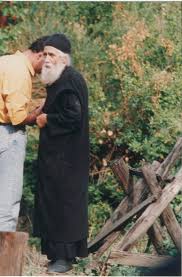
After two or three months, he returned and crying told me the following. In Athens, when he experienced various bad mishaps and this melancholy caught hold of him, this depression, he got on his motorcycle so as to commit suicide. Speeding he said: “There is no one in the world, nobody loves me, [no one's] interested, better to kill myself and end my life”. 
He had gotten out of Athens and was going down the road, intending to finish his life. While speeding, suddenly his bike was immobilized without him being hurt. At the same time he saw Father Paisios' figure in front of him, who said: “Stop! Don't do it.” As soon as he saw the figure of the Elder, he remembered that he was the only one who really loved him and showed him this love. Father Paisios was a very expressive person. When young people with problems visited, he showed them so much love, as if they were small children. In this way, those children were comforted. After having told me this story, I set off to the Elder and asked him: “Is it true that this incident happened?” He said: “I don't know but what I do know is that many times when I am praying in my cell, the Holy Spirit takes me me to hospitals, houses of people in pain, to people that are ready to commit suicide, etc. I don't do anything, except pray and light candles.”
In his cell he always had candles lit in front of his icons. The cell was plain, ascetic, very poor, with icons placed on the walls and lit candles. Once, when he was sick at Holy Cross and I was looking after him, I went to his cell constantly. It was a very small cell (2.50mx2.00m), and the elder always had on a stove recessed in the wall, because the cold caused him trouble. On one side was his small bed, which was wooden, like a coffin, full of icons [around it] and a large Russian 'monastic schema' over it. On the other side underneath, he had some old rags which were supposed to be his rug. He used to tease me and say: “This rug is Persian and they sent it to me from Baghdad.”     
It was an old rag, which was used to place saddles on mules. He also had a small stool where he used to sit and pray, a piece of wood he placed on his knees and wrote on, a hole with a few sheets of paper and a couple of pencils with which he wrote.
Father Paisios was extremely poor. He owned nothing. Many people left money for him. They hid it so that he would find it later. But when the Elder used to find money, he usually placed it in books or magazines and gave it away. He was so poor that once, I remember he told me he didn't even have 500 drachmas to buy bread. He did not have a mini gas stove; he did not have any cooking pans. He only had a couple of tin cans, where he used to throw tea or boil rice inside. He also had a small pot which he would rarely use when he was hosting strangers. Then, as he used to say, he would also add in a spoon of lentils to make it a formal meal.
He would eat maybe a tomato or some greens which he took from his small garden. When I stayed with him, he told me every couple of days: “Go eat in one of the monasteries and come back afterwards.” He only kept tea and dried bread: nothing else. I can say that as much as we eat in a meal, he used to eat in two weeks. He was truly a fleshless man, an earthly angel and a heavenly person. Not only did he not eat anything, but he hardly slept at all.
As a monk, of course, he exactingly abided by the schedule of the daily services: the evening, compline, midnight office, matins and the hours. Later on, he substituted most of the services with the prayer rope. He would keep vigil every night. He took a little rest after sunset and even less before sunrise. And I used to see that too, when I would go. 
I will tell you an experience I had personally because it testifies to this person's sanctity. When, in 1977, I joined him and remained with him for several days, it happened to be the feast of the Holy Cross. It was September 13 on the old calendar and he said to me: “We will perform a vigil tonight and in the morning a priest will come to perform the service.” I was a deacon then.
Indeed, I stayed there and from approximately four in the afternoon he said for us to perform the evening vesper saying the prayer (i.e. the Jesus Prayer) using the prayer rope. Indeed we prayed for one and half to two hours using the prayer rope. At six o'clock he called for me, made me a tea, showed me how to perform the vigil with the prayer rope and told me that around 1:30 a.m. he would call me to read the preparation prayers for Holy Communion, and after that we would continue up until morning when the priest would arrive. Indeed, I tried to do everything he told me.
All night I heard the Elder praying and walking back and forth and sighing. It was an amazing experience, because in that desert I was scared, but the Elder was like an unshakable pillar and prayed close by. 
We went to the church. The chapel was long and narrow, and there were five icons on its iconostasis but only one bench inside. He let me stay on the bench, the Elder by my side and we started reading the preparation service for Holy Communion. The Elder said the phrases “Glory to Thee our God, glory to Thee”, and afterwards in the troparia (hymns) to the Mother of God “Most Holy Mother of God save us”. Every time he said a phrase he did a prostration. And I, close by holding the candle, watched and read the troparion. When we reached the troparion that says, “Mary, Mother of God, the venerable tabernacle of sweet fragrance”, and the Elder said “Most Holy Mother of God save us”, in an way expressing intense distress, then I was just about to say “Mary, Mother of God”. Immediately though, everything altered―I cannot comprehend what happened. Suddenly, the whole cell lit up, and something like a light breeze entered the chapel and the oil lamp of the Mother of God started to move on its own. There were five oil lamps on the iconostasis, but only this oil lamp was moving continuously. I turned towards the elder, and he nodded to stay quiet. He bent down, and remained bent and I remained holding the candle in my hand, but the candle was not necessary because everything was lit up; there was abundant light, as if it had suddenly dawned. I waited for quite some time. The oil lamp was still moving. The light remained, and the Elder was silent. Half an hour later I started reading on my own, since the Elder did not speak. I read the service on my own, until I reached the seventh prayer of Saint Simeon. There like that, again in a very heartening way, the oil lamp stopped moving. The light disappeared, and I needed the candle once again to read.         
When we finished preparation prayers for Holy Communion, I said to him, “Elder, what was that?” He replied, “What?” I said, “The incident in Church. I saw the Panagia's** oil lamp moving and the cell was lit up.” He says: “Did you see anything else?” I replied that I did not see anything else. I wanted to tell you that at that time my mind stopped working, and I was unable to think.
I couldn't understand anything. I only watched all this as a spectator. He said: “My son, what was it! Don't you know that the Panagia, here on Mount Athos, goes around all the monasteries, to all the cells, to see what we're doing. She passed by this way, saw two loonies here and moved the oil lamp to let us know She passed by.” And the Elder laughed. After that occurrence that night, he told me of many incidents from his life―he was very moved―and maybe that was the reason we then developed a close relationship with the Elder. He trusted me with a lot of things concerning himself. 
I am truly convinced that Father Paisios was a man that provided support for the world through his prayers. He was a man equally worthy as the great fathers of our Church.
One may talk for hours and days about Father Paisios. The miracles that took place through his prayers are probably countless. I will tell you about something that took place towards the end [of the elder's] life. A father who had a small child wandered around all Mount Athos to find the monk that saved his son from death. One night, the small child was riding a bicycle, and attempting to turn somewhere, was hit by a truck. The truck was going to mash the child with its wheels, when a monk appeared, grabbed him, threw him to the pavement, and in this way the child was saved. The child saw the monk, but did not know who it was. He told his father what happened and the father brought his child to Mount Athos and went around all the cells and monasteries to find the monk, until they arrived to Father Paisios whom the child immediately recognized.  
Also, another incident took place before I left Cyprus. A young man visited the Elder and wanted to tell him that his wife was very sick. The Elder had received a lot of people and was very tired and said to them: “Children, I cannot, leave and go to Iviron.” The young man said: “I want to tell you something.” The Elder replied: “Go my son, go. Go.” “But I have something important to tell you Elder!” “Go my son, there is nothing wrong. Go and God will help.” He insisted but the Elder told him: “My son, go make it in time for the Monastery, before it shuts”. Then the young man revealed the reason: “Elder, my wife is sick!” “Go. Your wife is fine”. The young man looked at his watch, to see how long he still had to head to the Monastery; it was 2:45 p.m. He left disappointed because he did not achieve anything. When he returned home, his wife, completely recovered told him the following: “Suddenly as I was seated in my bed, I felt a cold sweat, and from then on I was cured. I went to the doctor who said I was completely fine.” He asked her, “What time did this happen?” “It was Friday at 2:45 p.m.” That is, the time the Elder told him: “Go. Your wife is fine”. 
There are numerous such incidents that we can talk about. But the most important thing is not the Elder's miracles, but his great love for God, his deep faith and the fact that he was a true child of the Orthodox Church and of monasticism. I think that no matter what anyone may say, they will not be able to describe the Elder. He always said: “Let us love God and strive in magnanimity”. He said that Christ is oxygen. Let us not turn it into carbon dioxide. And that is why he always wanted all Christians to be courageous, full of joy for God's love and never be disappointed, because, as he always said, anxiety and disappointment are always from the devil and never from God.

*Trans. Note: On Mount Athos (and in many monasteries, in general) the term “world” refers to the world outside of Mount Athos (or the monastery).
**Trans. Note: “Panagia” is the most common title used for the Mother of God in Orthodox Christianity. It means All-Holy.
Source: TESTIMONIES OF PILGRIMS
ELDER PAISIOS THE MONK OF ATHOS 1924-1994
PUBLICATION 'AGIOTOKOS KAPADOKIA'
Translation by: Holy Monastery of Pantokrator


Category

1915 Armenian Genocide 21st-century Christian martyrs‎ Al Qaeda Apostles Arab Christian Arab-Orthodox Archimandrite Tikhon Shevkunov Asia Australia BBC Belarusian Orthodox Church Bethlehem Bible movies Bulgarian Orthodox Church Byzantine C.I.A. Cairo China Christian Armenians Christmas Traditions Christmas tree Conspiracy Constantinople Documentary Easter Ecumenical Patriarch Ecumenical Patriarch Bartholomew I Ecumenical Patriarchate of Constantinople Elder Ephraim of Vatopaidi Elder Porphyrios Epiphany FREE Greetings Cards FREE books Fr Seraphim Rose Georgian Orthodox Church Greek Orthodox Church Greek Orthodox Easter Holy Fathers Holy Scripture Holy Tradition Internet Interview Italy Jesus Christ Middle East Miraculous Icon Mount Sinai Movie Trailers Orthodox Church in America Palestine Prophecy Russia Russian Orthodox Church Saints Shroud of Turin Son of God St Nicholas of Myra The Mount Athos Food Evolution UK Ukraine Ukrainian Orthodox Church Vatican Watch FREE full movie africa al assad albania anti-Morsi protests army bank bible bible translations bulgaria byzantine music christianity christians christmas church coptic church copts cyprus daily news economy egypt egypt pope elder elder Paisios elder joseph of vatopaidi english subtitles europe food france fyrmacedonia germany greece greek greek food greek music greek orthodoxy health and medicine icon iran islam islamist israel jerusalem jews jihad killed libya mafia monastery money mother of god mount athos music muslim muslims news orthodox church pakistan patristic tradition photo photos picture politics pope protests quotes recipes religion romania romanian orthodox church saint science spy syria theotokos travel turkey tv usa vatopaidi video war world
Related Posts Plugin for WordPress, Blogger...