Search This Blog

Image and video hosting by TinyPic
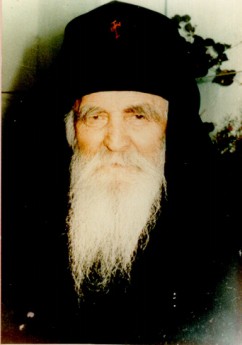
Showing posts with label elder Philotheos Zervakos. Show all posts

Friday, January 4, 2013

Elder Philotheos Zervakos: Two Medicines


I am sending you a recipe containing two medicines very effective against all the passions and which cure every passion, every evil and sin. The recipe is my own while the medicines you will seek from the pharmacy of God you will receive freely without paying. 
To receive them, though, you must know in what manner to ask for them. You will ask for them in the manner in which the poor ask charity of the rich rulers, especially when they are in danger from hunger.  They shout, they cry, they wail. Have pity on me, I am in danger, I am dying of hunger! And if he is charitable and compassionate he gives them whatever they need and thus they are saved.
Our own Ruler, who is rich in mercy and compassion, who possesses all things in His hand, our heavenly Father is so compassionate, merciful and mankind loving, that He himself commands us to ask of Him and He will grant us. Ask and it shall be given, seek and ye shall find, knock and it shall be opened…Seek the Kingdom of God and all these things shall be added unto you. Do not sit and be negligent. Seek with faith, piety, contrition and tears from God to give you internal humility, not external humility, a humble train of thought and not a humble form. Ask Him to give you also guileless-pure love and persist till you receive.  
And when with God’s grace you obtain humility and love then you obtained the virtues, God Himself, who dwells in the hearts of the humble and meek and remains together with those who have love. Love and humility never fall.

Sunday, March 13, 2011

Not on the New Calendar!: The Repose of the Blessed Elder Philotheos Zervakos

 
What follows is an excerpt from Blessed Elder Philotheos Zervakos, Vol. 11 in the Modern Orthodox Saints series by Dr. Constantine Cavarnos (pp. 69-75). The title of this excerpt is not in the original, but was added by the webmaster for posting...

Blessed Philotheos reposed in the Lord at 6:00 in the morning of May 8 according to the New Calendar, and April 25th according to the Old [1980]. In accordance with the instructions he had given, both oral and in writing, his funeral service was performed in the church of the Monastery of Longovarda, and then his body was taken to the great Byzantine Church of Ekatontapyliani in Paroikia, the capital of Paros, to be saluted by his countless spiritual children and people in general. After this, his body was taken back to the Convent at Thapsana. There it was buried in the tomb which the holy Elder had constructed long before his repose adjacent to the Chapel of his Spiritual Father St. Nectarios which he erected in 1969-1970.

The burial was performed by Archimandrite Dionysios of the Athonite Monastery of Simonopetra—the same monk who had confessed him on April 25. Father Dionysios—now Abbot of Holy Cross Monastery in Jerusalem was asked to do this by Blessed Philotheos at the time when he was confessed. The reason for his choosing Archimandrite Dionysios for these two extremely important sacred events was not only the fact that Dionysios was a very dear and very devout spiritual son of his, but also the fact that as a monk of the Holy Mountain of Athos he followed the Old Calendar.

Here it must be explained that from the time when the New Calendar was introduced into the Church of Constantinople in 1924 by Patriarch Meletios Metaxakis and soon after into the Church of Greece by the Archbishop of Athens and of all Greece Chrysostomos Papadopoulos, the holy Elder strongly protested against this arbitrary innovation. He protested because it resulted in the split of the Church into hostile groups: the New Calendarists and the Old Calendarists. He wrote many personal as well as open letters of strong protest to Orthodox Church leaders and also a substantial pamphlet on the Calendar problem, asking them to bring back the Old Calendar into the Church and thereby unite it. But they ignored his strong protests and entreaties. He was deeply troubled as he saw year after year his hope of such a thing happening not being fulfilled; and seeing, moreover, that the calendar innovation had opened the door to other very serious innovations under the name of "Ecumenism"—such as despising holy canons of the Church and placing "sentimental brotherly love" or pseudo love in opposition to the Truth. 

As a result, in his last years he decided to have the Monastery of Longovarda proceed to follow the Old Calendar. However, the ranking monk Father Leontios—who for decades had acted as abbot whenever Blessed Philotheos was away—unyieldingly dissented. He pointed out that this would have grave consequences for the monastery, would cause turmoil on the island, whose churches were all under the authority of a New Calendarist bishop, and would create serious problems for those of his spiritual children who were members of New Calendarist churches. There was the likelihood that the monks of the Monastery of Longovarda would be expelled from it by the police at the request of the local bishop, if they persisted in the return to the Old Calendar.

The holy Elder found himself in the painful dilemma of either introducing the traditional, Old Calendar into the Monastery and facing the anticipated disastrous consequences of this act, or letting the Monastery continue to follow the New Calendar, the introduction of which has split the Church into groups hostile to each other. He resolved the problem for himself personally by choosing as his final Confessor a very pious priest-monk who followed the Old Calendar as do all the monks of the Holy Mountain and also entrusting this same priest to bury his holy body, thus ending his earthly life as a follower of the traditional calendar.

Friday, March 11, 2011

Constantine Cavarnos, Schemamonk and Professor, Has Reposed (1918-2011)

The following encomium was written by Archpriest Joseph Frawley in honor of the late professor and schemamonk Constantine Cavarnos.

 
The noted author and lecturer Schemamonk Constantine (Cavarnos) fell asleep in the Lord on the morning of March 3, 2011 at St Anthony's Monastery in Arizona, and was buried there the same day.

Dr Cavarnos was born in Boston in 1918, and graduated from Harvard University, where he also received a Doctorate in Philosophy. He taught at several colleges in America, and contributed articles and reviews to various publications through the years. In 1956, he founded the Institute of Byzantine and Modern Greek Studies in order to promote interest in Orthodox spirituality, philosophy, and modern Greek culture.

He lectured in schools, seminaries, and parishes in this country and abroad, where his clear, lucid presentations were always well received.

Dr Cavarnos wrote nearly one hundred books including volumes on philosophy, theology, and the very popular series of Modern Orthodox Saints. His first book A DIALOGUE BETWEEN BERGSON, ARISTOTLE, AND PHILOLOGOS was published in 1949. His latest, THE PHILOKALIA, VOL. 2, was released just this year.

Although he began his career with philosophical studies, he progressed to the true philosophy, which is how the Church Fathers describe monasticism. Dr Cavarnos admired the monastic life, and wrote several books on the subject. Even while living and working as a layman, he seemed to be detached from the world. The late Greek Orthodox Archbishop Michael used to call him "a monk living in the world." Meeting him, one sensed that here was a man of true piety and prayer.

In the course of his career, Dr Cavarnos knew many prominent people. He has written of his long friendship with the Greek iconographer and writer, Photios Kontoglou, who brought about a revival of Byzantine iconography. He also knew some of the Orthodox Church's great Spiritual Fathers, such as Archimandrite Philotheos Zervakos.

When Dr Cavarnos lost his sight, he embraced the monastic life and was tonsured at St Anthony's Monastery in Florence, AZ. I believe he always intended to end his life in a monastery, and that this was the fulfillment of his fondest wish.

It was my privilege to know Dr Cavarnos for almost forty years. Whenever my wife and I would travel to the Boston area to visit family, we always tried to make time to visit him at his home in Belmont, MA. He was a major influence in my life through his books, lectures, and paternal counsel. Our conversations at his home were just like his books: uplifting, edifying, and soul-profiting. His books remain as his legacy, and will continue to inspire and instruct future generations of those who seek the heavenly Kingdom.

There was an understandable sadness when I heard that he had completed the course of his earthly life. However, there is also a sense of joy because he is, I believe, with God and with all the saints who ever lived.

May the Lord be merciful to the ever-memorable servant of God, Schemamonk Constantine, and give him rest in Abraham's bosom, and number him among the just.


Friday, March 4, 2011

Elder Philotheos Zervakos on the Humility of Saint Nektarios of Aegina

An account of a lesson in humility learned by the Blessed Elder Philotheos Zervakos from his Spiritual Father, Saint Nektarios of Aegina.

 In 1910, after I was ordained deacon, upon learning that my Spiritual Father Saint Nectarios was at Aegina (he had retired as head of the Rizarios Ecclesiastical School and withdrew to Holy Trinity Convent, which he had established some years earlier), I asked for permission from my Elder at Longovarda, Father Hierotheos, and went to received his blessings.

Having arrived at Aegina, I went up to the Convent at about 12 noon. It was August, and the temperature was very high. Outside the Convent I saw an old, white-bearded man, wearing a straw hat, and his cassock raised and secured to the belt. He was digging with a pickax, and with a shovel he was filling a wheelbarrow with soil, stones, etc., and pushing it to a distance of 50 to 60 meters. Not realizing that he was my Spiritual Father, the Most Reverend Nectarios, and thinking that the man I saw was a laborer who had put on the cassock in order not to dirty his clothes, or some monastic novice, I approached him, greeted him, and said:

“Is the Most Reverend Nectarios here?”
“Yes,” he replied, “what do you want him for?”
“Go and tell him, please, that a spiritual son of his, a Deacon, wants to see him.”
“Immediately,” he replied to me. And dropping the pickax he pointed at the one-room guesthouse which had been built outside the Convent, and said:
“Go to that room and wait, and I shall go and bring him out to you.”

In a few minutes he came to the guesthouse wearing his kalymmauchion and his outer cassock. At once I realized that it was the Most Reverend Metropolitan Nectarios himself whom I had taken for a laborer and had slighted. For I never imagined that it was possible for a Metropolitan to be engaged in such a lowly kind of work, especially at noontime, when everyone else was having a siesta. He had such a high office, and yet he was so humble!


From Blessed Elder Philotheos Zervakos, by Constantine Cavarnos. Modern Orthodox Saints, volume 11. Published by the Institute for Byzantine and Modern Greek Studies.

Sunday, January 30, 2011

Blessed Elder Archimandrite Philotheos Zervakos of Longovarda (1884-1980)


Blessed Elder Archimandrite Philotheos Zervakos is a well-known 20th-century Greek Orthodox elder, from Paros island, and spiritual son of St. Nektarios of Aegina. He was imprisoned twice by the Turks during the final years of the Ottoman occupation of Thessaloniki and many have witnessed the saint to "float/walk on air". Although he has not been glorified he is considered a saint in Greece.

Blessed Elder Archimandrite Philotheos (Zervakos) was born in the small and remote village of Pakia in Sparti, Peloponesse, Greece, in the year 1884 and was given the name of Constantine at his baptism. From childhood he demonstrated an exceptional love for God.

He was 18 years old, when he was inspired by the 54th Psalm to follow the monastic life. He departed from his paternal home with neither shoes or any possessions; he only had his tunic and a small gospel. In 1912, April 22, Father Philotheos was ordained to the priesthood by Metropolitan Gabriel of Trifilia and Olympia. In 1924, he made an extensive pilgrimage to the Holy Land and Egypt. This is all described in his book published in 1925, Great and Wondrous Pilgrimages to Palestine and Sinai.

In 1930, Elder Ierotheos reposed, and Fr. Philotheos succeeded him as abbot of Longovarda. By this stage, Fr. Philotheos had the reputation of a saint. In 1934, he made another pilgrimage, this time to Constantinople. He returned to Greece and founded the convent of Panagia Myrtidiotissa Thapsanon (The Virgin of the Myrtle Tree), 4 km from Lefkes on the island of Paros, Greece.

Throughout his life, the Elder preaches the word of God and heard confessions for 68 years (1912 to 1978). During this time, he visited the islands of Paros, Antiparos, Naxos, Amorgos, Thera, Syros, Tinos, Andros, Sifnos, Patmos, Rhodes, Chios, Mytilene, Aegina, Hydra, Cyprus, Kefallinia, Zakynthos, Evoia, Skiathos, Prigippos. He also visited over 54 cities and towns throughout Greece, including Athens, Sparta, Corinth, Thessaloniki etc. and internationally including Alexandria, Cairo, Constantinople, Suez etc

During his life, he built 12 churches, two monasteries, three cemeteries and two schools. The money he would receive from the faithful he would distribute to the poor, the widows and the orphans.

On the morning of May 8, 1980, the blessed Elder Philotheos died in his cell at Thapsana, Paros. His funeral was conducted by Archimandrite Dionysios of Simonopetra Monastery of Mt Athos. His relics were laid to rest at the convent in Paros, in a place that he chose beside the chapel dedicated to his spiritual mentor, St. Nektarios of Aegina (November 9).

He wrote :

Everything that the all-wise Holy Apostles and the Godly-wise Fathers of our Holy Orthodox Church handed down to us, many of their successors today want to abolish and so dislodge the Church. However, they will be unable to do this, because the Lord will crush them like vessels of clay. And the few elect will be shaken, and few out of the few will remain unshaken. Let us force ourselves to remain faithful and unshaken in whatever we have received from the divine Apostles, the Holy Fathers, and the teachers of our Church ... do and write as much as you can, but todays generation has eyes and sees not, ears and hears not... [Jer. 5:21; cf. Ezek. 12:2, Ps. 134:16-17, Mark 8:18]....

+++
Our Lord said that His followers would perform miracles just as He did. Certainly, the life of Blessed Elder Philotheos gives ample evidence of his belonging to the company of Christ's true disciples. This is further confirmed by the abundant grace he possessed as a wonderworker, both during his lifetime and since his repose. His popularity as a confessor was heightened by his gift of clairvoyance: there are numerous examples of how he would remind people of specific sins they had forgotten or neglected to confess. There are recorded cases of barren couples who conceived soon after asking the Elder's intercession. Others have reported healings from goiter, from gangrene, from severe headaches and toothaches. A Striking miracle was recorded by Efstathia and Andrew Brouma of Athens.

A son, George, was born to them in March 1963. He appeared to be a normal, healthy baby, but as the weeks went by, he stopped eating. A pediatrician diagnosed the problem as "hepatitic enlargement of the tubes" and blood tests revealed Cooley's Anemia, a condition requiring repeated blood transfusions. The prognosis for; the infant was grim. A few days after the baby had been admitted to the hospital, the mother's sister recommended that they go see Elder Philotheos, who had just arrived in Athens from Partos. They did so, and, at the mother's tearful entreaty, the Elder accompanied them to the hospital.

The infant's weak breathing gave the only visible sign of life. The Elder prayed and made the sign of the Cross over the child. He then placed an icon of the Mother of God on the pillow. "What should I do?" asked the distraught mother. "Should 1 let him die here or should I take him home?" "No,:!' replied the Elder, "the doctors will give him to you in two or three days. However, in a year's time bring him to me on Paros." Those gathered around the crib were dumbfounded. "Father, what are you saying?" explained a nurse. "The child is at his end. It is unlikely that the doctors will even be able to perform the transfusion." "You are thinking one thing," responded the Elder, "and the Panagia is thinking another."

That night, the baby's fever rose and he had difficulty breathing. By morning, however, the fever had subsided and when the nurse weighed him she was puzzled to discover that he had gained two and a half ounces: the baby hadn't eaten anything for two days.
It was a miracle. On the third day, the baby was released from the hospital. His discharge papers read simply, "Anemia." The mother took her baby to Elder Philotheos to thank him for his wonderworking intercession. The Elder called the boy, "Moses-Theosostos" (God-saved).


Source:
Link this page: 

Counsels For Students- By: Elder Philotheus (Zervakos) of Paros

Elder Philotheus (Zervakos) of Paros (1884-1980)

Continue your lessons and don’t look at what this or that person is doing- just pay attention to yourself (Deut. 15:9). If many of your fellow-students are lewd, impious, blasphemous, and unruly, don’t you imitate them. When the Lord sent His disciples into the world to preach the Gospel, He told them: “I am sending you as sheep amid wolves: become wise like serpents and innocent like doves” (Matt. 10:16). And you, my child, are like a sheep amid wolves: become wise, and do not let the wickedness of the depraved, lewd, and impious influence you. Imitate the honey bee, which knows many impure, foul-smelling, and filthy places, but does not stop at these. 

He selects the fragrant and choice blossoms of the bushes and tress, and he gathers up the honey and the fragrant, aromatic wax. If you see anyone who is good, wise, pious and virtuous, imitate and keep company with him. Anyone you see that is lewd, filthy, impious, blasphemous, proud, envious and vindictive, do not approach him and do not keep company with him; but do not find fault with him, for Christ said: “Do no judge, so that you may not be judged, and do not condemn, so that you may not be condemned” (Luke 6:37).

Love, respect and take care of your parents, and your brothers as well. If they don’t listen to you, and scorn you, then don’t tell them anything. Just pray that the Lord may enlighten them to be at peace with one another. Also pray that the Lord may grant peace to the whole world and that we may all be deemed worthy of the heavenly and unending life and kingdom. Amen.
Excerpt taken from the book:
Father Philotheos Zervakos: Paternal Counsels
, Vol.1

Category

1915 Armenian Genocide 21st-century Christian martyrs‎ Al Qaeda Apostles Arab Christian Arab-Orthodox Archimandrite Tikhon Shevkunov Asia Australia BBC Belarusian Orthodox Church Bethlehem Bible movies Bulgarian Orthodox Church Byzantine C.I.A. Cairo China Christian Armenians Christmas Traditions Christmas tree Conspiracy Constantinople Documentary Easter Ecumenical Patriarch Ecumenical Patriarch Bartholomew I Ecumenical Patriarchate of Constantinople Elder Ephraim of Vatopaidi Elder Porphyrios Epiphany FREE Greetings Cards FREE books Fr Seraphim Rose Georgian Orthodox Church Greek Orthodox Church Greek Orthodox Easter Holy Fathers Holy Scripture Holy Tradition Internet Interview Italy Jesus Christ Middle East Miraculous Icon Mount Sinai Movie Trailers Orthodox Church in America Palestine Prophecy Russia Russian Orthodox Church Saints Shroud of Turin Son of God St Nicholas of Myra The Mount Athos Food Evolution UK Ukraine Ukrainian Orthodox Church Vatican Watch FREE full movie africa al assad albania anti-Morsi protests army bank bible bible translations bulgaria byzantine music christianity christians christmas church coptic church copts cyprus daily news economy egypt egypt pope elder elder Paisios elder joseph of vatopaidi english subtitles europe food france fyrmacedonia germany greece greek greek food greek music greek orthodoxy health and medicine icon iran islam islamist israel jerusalem jews jihad killed libya mafia monastery money mother of god mount athos music muslim muslims news orthodox church pakistan patristic tradition photo photos picture politics pope protests quotes recipes religion romania romanian orthodox church saint science spy syria theotokos travel turkey tv usa vatopaidi video war world
Related Posts Plugin for WordPress, Blogger...